
Utility trenching costs in Snohomish County are straightforward when scoped by length, depth, soil, and restoration. Most residential trenching runs about $10 – $30 per linear foot, with typical single‑utility tie‑ins landing between $1,500 – $4,000 for 50 – 120 feet; deeper digs, rocky/clay soils, driveway or street cuts, and multi‑utility runs can push totals above $10,000. Indepth Excavation is here to give you the answers for your utility trenching needs.
Here is the utility trenching general costs in Snohomish County, King County, Skagit County, and most of Washington State.
Per‑foot ranges
- Soft loam, shallow (18″- 24″): about $10 – $18 per LF for trench and backfill, more when adding bedding, conduit/pipe, and restoration.
- Clay or rocky soils, deeper (24″- 36″+): about $18 – $30 per LF due to slower production, shoring/benching, and larger spoil volumes.
- Combined trenching (power + comms + water/sewer): linear‑foot cost rises with trench width, but total project often saves on mobilization and restoration.
Typical totals by scenario
- 60 – 100′ residential water or power lateral, lawn restoration only: usually $1,500 – $3,000.
- 80 – 120′ sewer lateral at 2% slope, 24″- 36″ depth with inspection: usually $2,000 – $4,000.
- Street/driveway crossing requiring asphalt or concrete cut/patch: commonly adds several hundred to several thousand dollars depending on width, thickness, and compaction specs.
What moves price up or down
- Soil: clay/rock adds 20 – 60% vs loam due to slower digging and wear.
- Depth: stepping from 18″→24″ often adds 10 – 20%; 24″→36″ can add 20 – 40% for shoring and safety.
- Access: narrow side yards or backyard‑only access increases labor/equipment time.
- Restoration: lawn is minor; asphalt/sidewalk/driveway restoration is a major adder.
- Permits/inspections: expect a few hundred dollars baseline; right‑of‑way work and pavement cuts add more.
Fast estimate guide
Multi‑utility or street work: scope for $10,000+ when combining utilities at depth with pavement restoration and multiple inspections.
Short run, soft soil, lawn finish: anchor around the lower teens per LF with a $1,500 – $2,500 total on 80 – 120′.
Mixed soils, 24″- 36″ depth, some hardscape repair: plan in the upper teens to high‑20s per LF, with $3,000 – $6,000+ depending on length and restoration.
Average Cost Breakdown

For a typical residential project, such as tying a home into a city water or sewer line, costs usually fall between $1,500 and $4,000. Larger commercial jobs or multi-utility trenching can exceed $10,000. Soil type has a big impact: soft ground is faster and more affordable to dig, while rocky or clay-heavy soil slows progress and requires more equipment. Depth matters too, since deeper trenches require shoring and extra safety steps, which raise the bill.
Factors That Influence Trenching Costs

Several details explain why trenching estimates can vary so much from one property to another. Permits and inspections are often required by Snohomish County cities, adding a few hundred dollars to the total. Obstacles like tree roots, landscaping, or existing utilities in the way increase labor time and sometimes demand specialized machinery. Once the trench is dug and the line is installed, the site usually needs restoration. Replacing sod, repairing driveways, or rebuilding sidewalks adds to the bottom line but leaves the property looking finished. For deeper or wider trenches, specialized equipment may be required, which can bump costs higher. Each of these factors is part of why trenching jobs rarely come with a one-size-fits-all price.
Common Trenching Projects

Trenching shows up in many different situations across Snohomish County. Homeowners often need a short run to connect their home to city services. Contractors rely on trenching for gas lines, electrical conduit, or drainage solutions. Larger developments may combine multiple utilities into one trench to cut long-term disruption, even though the initial project is more complex. Indepth Excavation handles these different scenarios every day and knows how to plan the work efficiently.
Value of Professional Trenching
While it may be tempting to rent a trencher for a small job, professional trenching brings safety, speed, and accuracy that DIY methods cannot match. Deep trenches must be properly sloped or shored to prevent collapses, which can be extremely dangerous without the right training and equipment. Indepth Excavation makes sure every trench is built to the correct width and depth, following local codes and protecting the utility being installed.
Professional crews also save time. With the right machinery and experience, they complete projects quickly, reducing downtime for homeowners and contractors. Restoration is part of the service, so the property is left clean and usable instead of torn up. By working with Indepth Excavation, you get a trench that is safe, efficient, and ready for the next stage of your project.
Long-Term Benefits of Professional Trenching
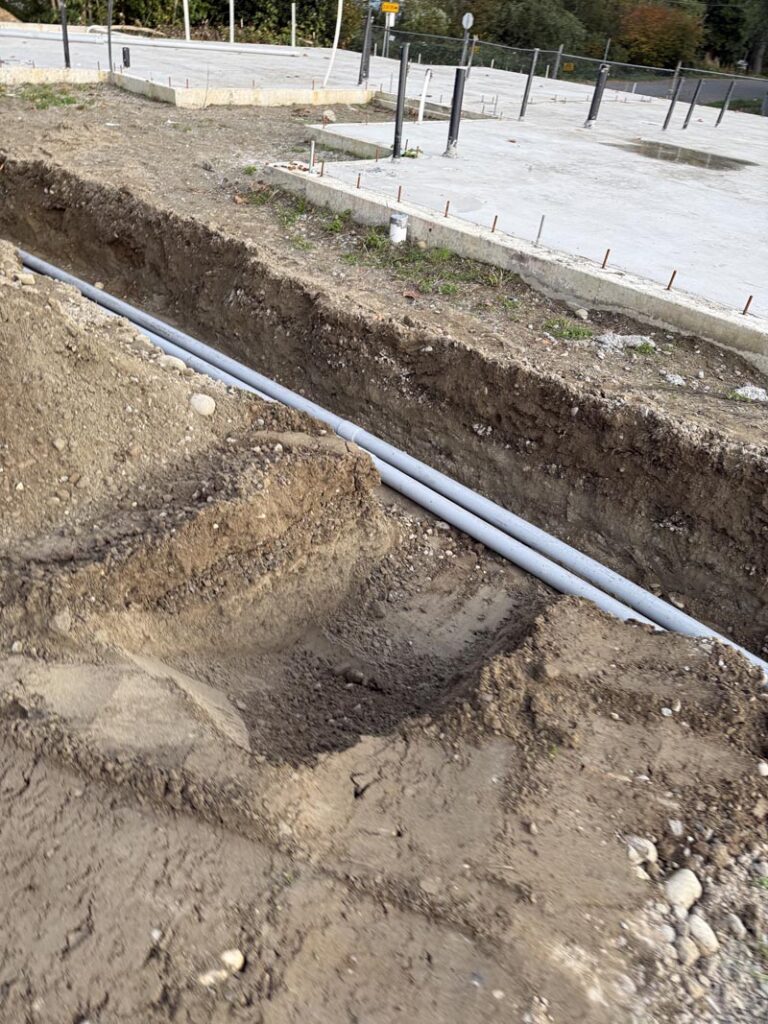
The benefits of proper trenching extend beyond the immediate installation. When trenches are dug with care and precision, they protect utilities from future issues and strengthen the overall property. Some of the long-term advantages include:
- Prevents costly repairs by protecting lines from premature damage.
- Supports property stability by reducing risks of drainage problems or uneven settling.
- Adds value over time since properly installed utilities are less likely to fail or need replacement.
These points show how professional trenching is an investment in both safety and property value, offering peace of mind that the work will continue to pay off long after the project is complete.remains stable, with less risk of drainage problems or uneven settling. Professional trenching is an investment in both safety and the long-term value of the property.
Start with Indepth Excavation
If you’re planning a utility trenching project in Snohomish County, Indepth Excavation is ready to help. Our team provides clear estimates, dependable timelines, and quality work that meets local standards. Contact us today to schedule your trenching project and get the job done right.
FAQs for Utility Trenching Costs in Snohomish County
What is the average cost per foot?
Most residential utility trenching in Snohomish County runs about $10 – $30 per linear foot depending on soil, depth, access, and restoration requirements, with short runs and rocky/clay conditions pricing toward the top of the range.
What’s the typical total for a residential run?
Single‑utility tie‑ins (water, sewer, gas, or power) commonly land between $1,500 – $4,000 for 50 -120 feet, while deeper, longer, multi‑utility, or street‑cut projects can exceed $10,000 when shoring and surface restoration are required.
Which factors drive the cost the most?
Depth (and required shoring), rocky or clay soils, narrow/backyard access, driveway or sidewalk restoration, utility separation rules, and permit/inspection requirements are the biggest price movers on otherwise similar‑length runs.
Do I need permits and inspections?
Yes, you can expect local permits and scheduled inspections before backfill; adders are typically a few hundred dollars and can increase if working in the right‑of‑way or cutting pavement, which also adds restoration requirements.
Can multiple utilities share one trench to save money?
In most cases yes. Combining utilities can reduce duplicate excavation and mobilization, but required separations, bedding, tracer wire, warning tape, and individual inspections still apply and may offset part of the savings.
Is DIY trenching worth it?
For shallow, short segments in soft soil it may seem feasible, but safety, depth/separation code compliance, inspection timing, and restoration standards usually make professional trenching faster, safer, and lower‑risk on total cost.