The cost to install an underground fire main in Snohomish County often ranges from about $5,000 to $40,000+, depending on pipe length, trench depth, surface restoration, and permits.
Installing an underground fire main is not like running a normal water line. It is life-safety work tied to fire code, inspections, and strict local requirements.
If you want fewer budget surprises, the best move is understanding what drives costs before the first trench is dug.
Introduction to Fire Main Installation Costs
In-Depth Excavation knows how Fire main pricing can feel confusing at first. That is because the pipe itself is only one part of the job. The cost is shaped by code rules, local fire authority requirements, and the ground conditions on your site.
A clear plan early helps prevent major budget surprises later.
Why Your Property Needs a Dedicated Fire Main
Many buildings with sprinkler and fire suppression systems need a dedicated fire water supply that is separate from domestic water. This line is built to stay ready, then deliver strong flow fast during an emergency.
For commercial buildings, apartments, warehouses, and some larger residential projects, the fire main is part of the path to passing inspection and getting final approval.
Snohomish County Fire Protection Requirements
Requirements can change by city and fire district. Fire officials can set the rules for pipe size, valves, hydrant placement, and how the fire line connects to the building.
That is why a quote that looks “too simple” can be risky. Two similar projects can price out very differently once the fire marshal’s requirements are known.
What Is an Underground Fire Main?
An underground fire main, also called a private fire service main, is the buried water line that connects the public water system to a building’s fire riser.
It stays dormant most of the time. When a sprinkler system activates or firefighters connect to the system, it has to deliver high flow right away.
Domestic Water vs. Fire Water Lines
Domestic water lines handle daily use like sinks, showers, and irrigation.
Fire water lines are built for emergency demand. They may sit unused for long periods, but they still have to be reliable on day one and year ten.
Key Components of a Fire Main System
According to Indepth Excavation typical underground fire main scope can include:
- Connection to the public main (often a tapping connection)
- Control valve setup, such as a post indicator valve (PIV)
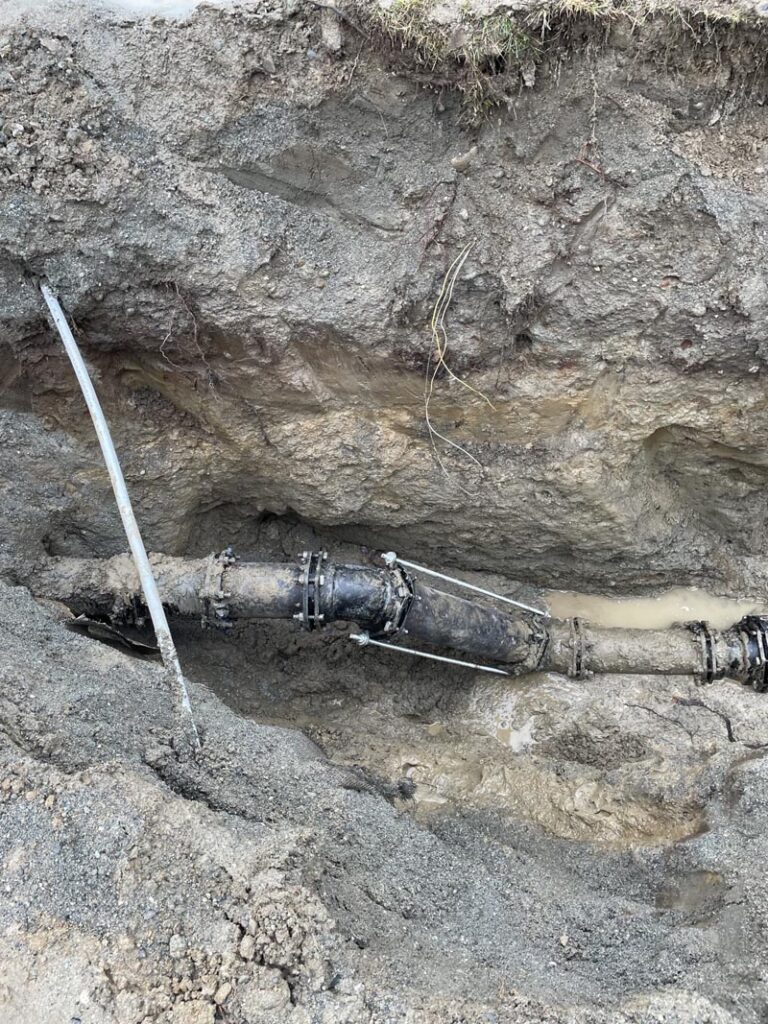
- Thrust restraint, like thrust blocks or restrained joints
- The pipe run to the building and the entry point at the riser room
- Testing and flushing steps required before backfill
Estimated Cost Ranges in Snohomish County
Fire main projects can be small or large, but most pricing comes down to distance, depth, and restoration. A short run on private property is one thing. A long run that crosses pavement or right-of-way is a different job.
Average Cost Per Linear Foot
Many underground fire main installations in Snohomish County, WA price out around $175 to $350 per linear foot when you include the core work. That range often covers:
- Excavation and trenching
- Pipe bedding and backfill
- C900 PVC pipe and fire-grade fittings
- Operator and crew labor
- Basic testing steps
If the run is deeper, crosses pavement, or needs traffic control, the per-foot cost can rise.
Small Projects vs. New Commercial Installs
Some projects are short tie-ins, repairs, or quick connections near the water source. These often land around $5,000 to $10,000.
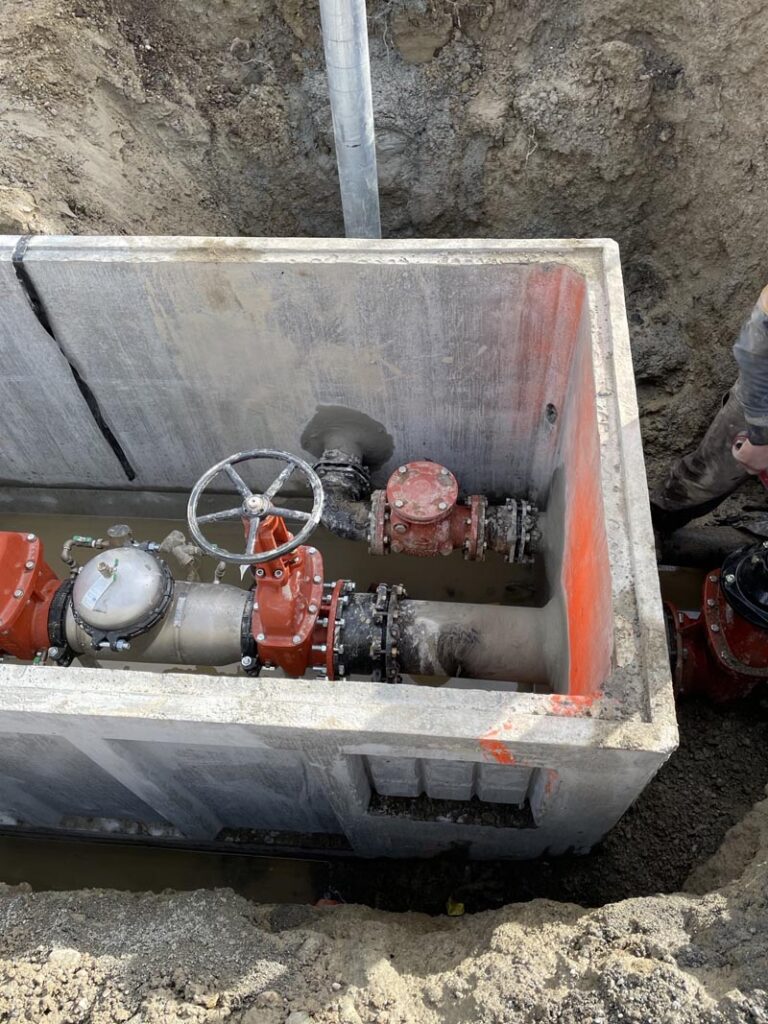
New commercial or industrial runs can land around $20,000 to $40,000+, especially when the distance is long or the plan calls for hydrants, valves, and added appurtenances.
Pipe Material Costs
Material choice can change the budget.
C900 PVC is common because it is corrosion-resistant and cost-effective.
Ductile iron is sometimes required in certain locations or standards, and it often adds cost due to material price and heavier handling.
Major Factors That Affect Final Pricing
Two projects can have the same pipe length and still price out differently. The job is shaped by what you have to dig through, how deep you have to go, and what needs to be repaired after the trench is closed.
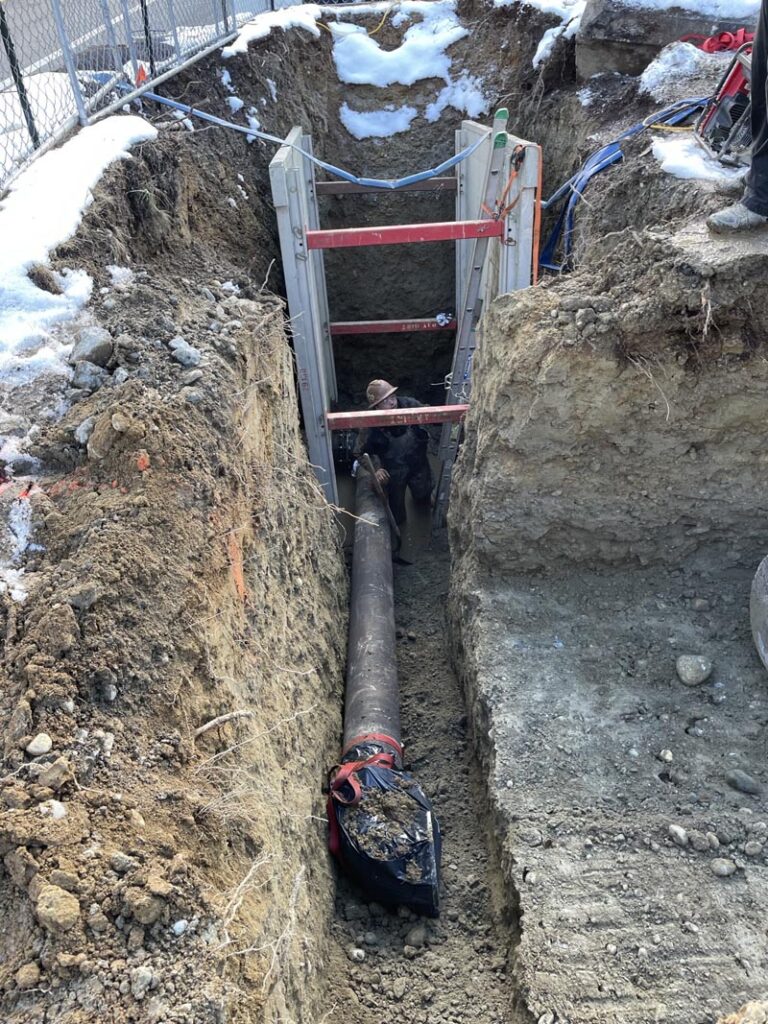
Trench Depth and Cover Requirements
Many local standards in Washington call for about 36 inches of cover over water mains in improved areas, and some standards call for more cover in unimproved areas or special cases. Cover depth affects excavation volume and backfill time.)
Soil Conditions and Glacial Till
Snohomish County soil can include hard glacial till, cobbles, and rock. When the trench is harder to excavate, production slows and equipment needs can change. That can raise labor time and operating cost.
Asphalt and Concrete Restoration
If trenching crosses asphalt or concrete, surface restoration becomes a major line item.
Saw-cutting and patching can add thousands, depending on how much surface area is opened. This is one of the biggest reasons fire mains installed in streets cost more than runs installed entirely on private ground.
Traffic Control and Right-of-Way Work
Work near roads or in public right-of-way can require permits and traffic control. Depending on the location, that can include a traffic control plan and flagging.
Traffic control adds cost because it adds people, planning, and coordination.
Snohomish County Permits and Regulatory Fees
Permits and reviews vary by jurisdiction. The county and the city you are in can change what is needed, and the water district can add its own connection rules.
Plan Review and Permit Fees
Snohomish County fire related permits and plan review fees can vary based on what is being reviewed. Depending on scope, the fees can start in the hundreds and go up from there.)
Water District Connection and Tapping Fees
Many projects require a connection or tap into an existing main. Water district fees can range from hundreds to several thousand dollars, based on the district, the connection method, and the size of the service.
Testing and Inspection Requirements
Before a fire main is accepted, it is commonly pressure tested, flushed, and inspected. NFPA 24 is a common standard used for private fire service mains.
A common requirement is a hydrostatic test around 200 psi, sometimes higher depending on the project, held for a set time with no visible leakage. The system is also commonly flushed and witnessed by an inspector.)
Licensing and Legal Requirements in Washington State
Fire mains are not a “general utility line” project. In Washington, underground fire service mains fall under fire sprinkler rules. That means you need the right contractor license for this scope.
Level U Contractor Requirement
For underground fire sprinkler supply mains, the contractor is commonly required to hold a Level U fire sprinkler contractor license. This license level is tied to underground work for dedicated fire protection water supply lines.
In plain terms, the contractor is licensed to install the underground fire line that serves the sprinkler system supply, and the work is built around NFPA 24 standards.
Risks of Unlicensed Fire Main Work
Hiring an unlicensed contractor for fire main work can create expensive problems. It can trigger stop-work issues, failed inspections, and rework.
It can also lead to state enforcement action. In Washington, fines for unregistered contracting can start in the thousands and can rise for repeat offenses.
Common risks include:
- Failed inspections and delays to your project schedule
- Rework costs, including re-trenching and re-testing
- Stop-work action and fines
- Insurance problems, especially if the system is not accepted
Ways to Control Fire Main Installation Costs
Cost control is mainly about planning and coordination. If you reduce surprises, you reduce extra labor time.
Coordinate Fire Main Work With Other Utility Trenching
If you are already opening trenches for sewer, storm, or domestic water, it can lower the total excavation cost.
Bundling work can help with:
- Fewer mobilizations
- Less surface restoration
- Cleaner utility routing across the site
Private Utility Locates Before Digging
Public locates help, but many sites have private lines that are not marked. A private locate can help identify unknown utilities before excavation starts.
Reduce Restoration, Reduce Cost
Restoration can be a major part of the budget, especially in asphalt and concrete.
A tighter route plan can reduce:
- How much pavement is cut n- How many surface areas need patching
- How much traffic control is required
Fire Main Installation Is a Safety Investment
An underground fire main is part of code compliance, property protection, and occupant safety. When it is installed correctly, it helps your building pass inspection and supports long-term reliability.
Get a Site-Specific Fire Main Quote
For a site-specific estimate, Contact Us In-Depth Excavation to schedule a walk-through in Snohomish County. A quick look at length, depth, access, and restoration needs is the fastest way to get a real number you can plan around.