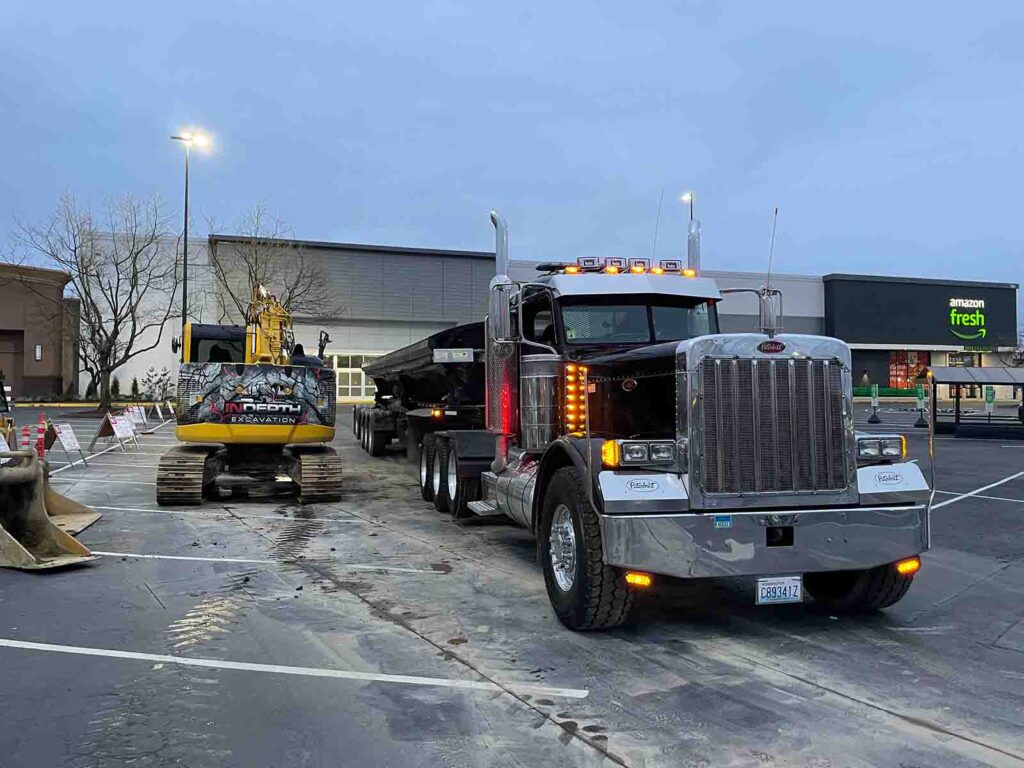
From sewer hookup to restored yard, Indepth Excavation handles septic tank decommissioning end-to-end across Snohomish County. We pump the tank, crush and backfill it to code, file the paperwork with Snohomish Health District, and leave your property graded and ready for what’s next – all with one crew.
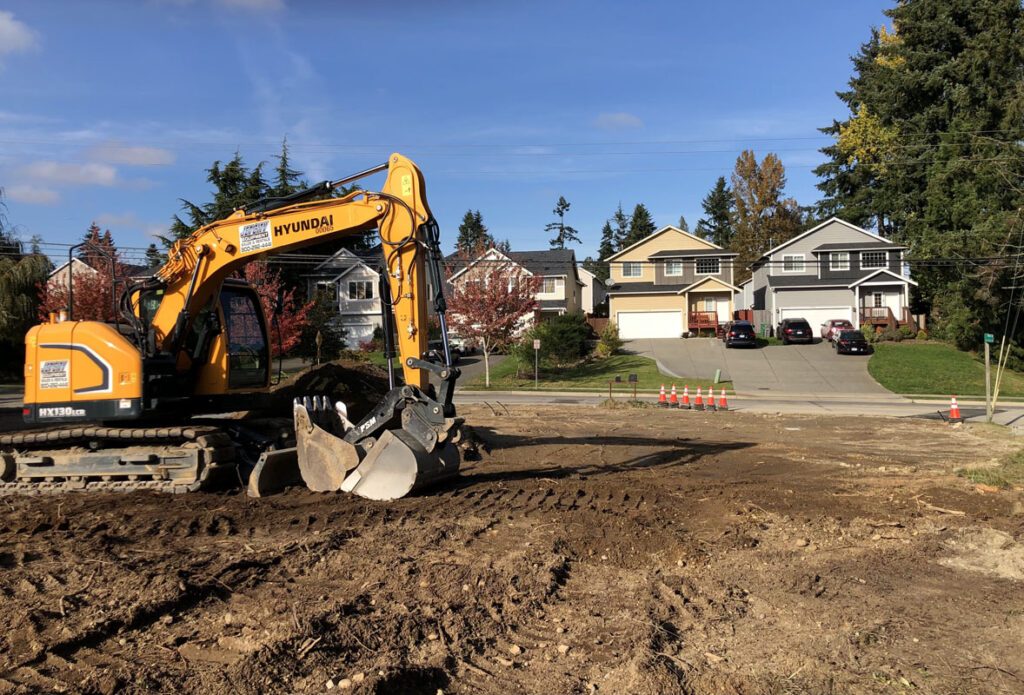
Septic tank decommissioning (also called septic tank abandonment) is the process of permanently taking a septic tank out of service in a way that meets Washington State regulations. The tank is pumped, structurally collapsed or removed, backfilled, and documented with the local health department so the property record reflects that the system is no longer in use.
In Snohomish County, decommissioning is governed by Washington Administrative Code 246-272A and overseen by the Snohomish Health District. The work has to be done by a licensed contractor, and the completed decommissioning has to be filed on record.
You probably need decommissioning if any of these apply:
If any of that sounds familiar, we can walk the property, confirm what’s there, and Dillion the owner of Indepth Excavation will give you a written estimate.

We also serve King County and Skagit County, including the cities of Seattle, Bellevue, Bothell, Redmond, Kirkland, Burlington, Mount Vernon, and Sedro-Woolley.
If you don’t see your city, give us a call – we cover the whole region.
You have options for septic decommissioning in Snohomish County – most are septic-pumping companies that added decommissioning as an upsell. Here’s what’s different about us:

Every job is a little different – tank size, access, soil conditions, depth, and whether you also need restoration or new utility work all change the scope. But the underlying sequence is the same:
Driveway disturbed? We do driveway repair. Lawn torn up? We regrade and prep for reseed. Drainage to redo? We install French drains and grade away from the foundation.
This is the part most septic-only contractors don’t do – and it’s why having an excavation contractor run the job tends to be cheaper and cleaner.
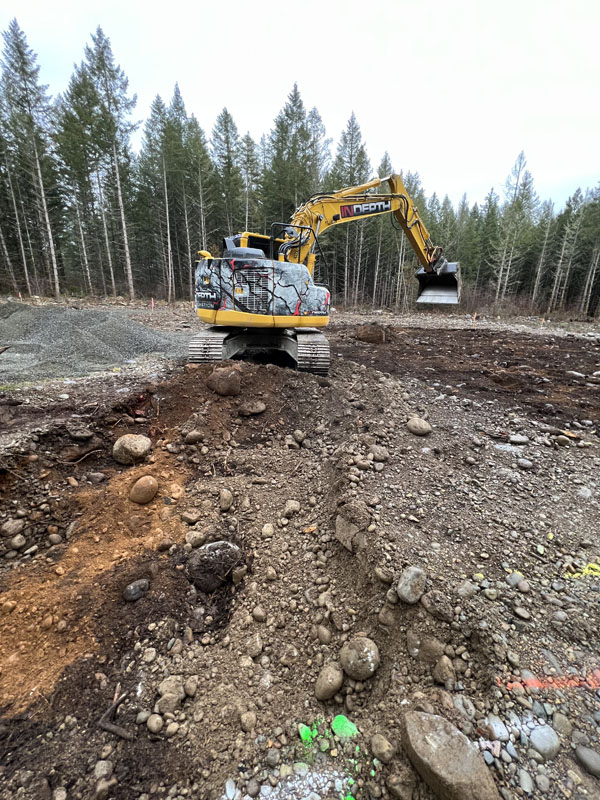
For most properties, decommissioning in place (crushing the tank and backfilling) meets Washington Administrative Code and Snohomish Health District requirements. Full removal is required only when you’re going to build directly over the tank location or specifically want a removal record for a sale. We’ll tell you which approach fits your situation.
Yes. Once your home is on public sewer through Alderwood, Lake Stevens, Mukilteo, Granite Falls, or any other Snohomish County sewer district, the old septic system has to be retired through a permitted decommissioning.
Three things, in roughly this order: title and lender issues when you sell, structural risk as old concrete tanks deteriorate and collapse (sometimes catching pets, livestock, or people), and potential code-enforcement action if the unpermitted tank is reported to the Health District.
We do. As a licensed Washington contractor, we pull the permit at the start of the job and file the completed decommissioning record with the Health District at the end.
Yes – restoration is part of every job. We backfill and grade the area, and we can also handle driveway repair, regrading, French drains, reseeding, or any other site work the decommissioning disturbed. Most septic-only contractors don’t do this – being an excavation contractor means we can finish the job properly.
Most residential decommissions are completed on-site in a single day. Permits add lead time – typically a week or two before work can start. If you’re coordinating with a sewer hookup, we sequence both jobs to minimize downtime.
Costs depend on a handful of things:
We give a written estimate after a free site walkthrough so the number you see is the number you pay. No surprise change-orders for things we could have seen on day one.
Yes. Decommissioning has to be permitted through the Snohomish Health District and filed on the property record. We pull the permit and file the completed decommissioning record as part of every job.
If you’re going on sewer, selling a property, or finally dealing with that old tank in the backyard – call us. We’ll walk the site, give you a written estimate, pull the permits, and handle everything from there.
Indepth Excavation 3220 157th Ave SE, Snohomish, WA 98290 Phone: 425-367-1521 Licensed in Washington – DEPTHDE828N7 Bonded & Insured